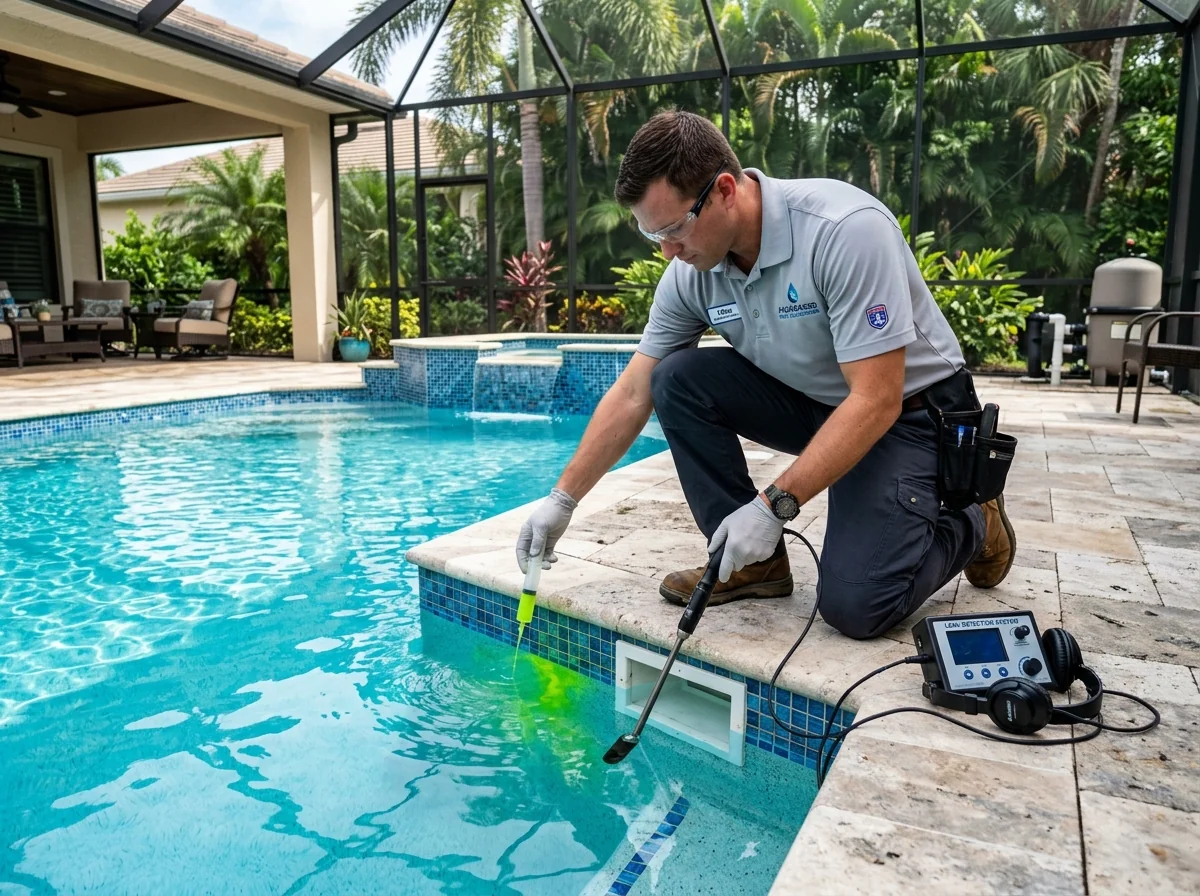
Skimmer Throat & Collar Inspection
Shifting soil and patio settling cause microscopic cracks between the plastic skimmer throat and concrete pool beam. We deploy micro-dye syringes to identify active suction leaks around faceplates.
An inground pool is a complex closed-loop hydraulic system holding 15,000 to 40,000 gallons of pressurized water. We inspect every hydraulic component to pinpoint water loss down to the exact joint.
Shifting soil and patio settling cause microscopic cracks between the plastic skimmer throat and concrete pool beam. We deploy micro-dye syringes to identify active suction leaks around faceplates.
The conduit pipe behind underwater pool lights is unpressurized and often cracked below the waterline, draining hundreds of gallons into the sub-deck. We dye test niches and apply waterproof seals.
Using specialized pneumatic plugs, we isolate suction, return, spa spillway, and dedicated cleaner lines. Digital pressure gauges verify if subterranean PVC pipes hold required pressure.
When a buried pipe shows pressure decay, we submerge specialized acoustic hydrophones and ground discs to track the underground leak sound right through thick travertine pavers.
We perform full dive inspections of deep-end dual drains and spring-loaded hydrostatic relief valves, ensuring pebbles or shell fragments aren't holding the valve open to the water table.
We scan plaster, pebble finishes, water features, and waterline tiles with high-density fluorescent dye to catch hairline settling cracks that allow water to migrate beneath your pool cage foundation.
In Southwest Florida, homeowners often wonder whether daily water loss is normal evaporation or an expensive underground pipe leak. Here is how to distinguish between the two:
Before scheduling, you can run this simple test to verify an active leak:
Due to Naples sandy subsoil, high summer water tables, and intense solar UV exposure, swimming pool leaks concentrate in distinct structural and plumbing junctions.
The plastic skimmer housing expands and contracts at a different rate than the concrete gunite pool shell. Over time, the seal between the skimmer face and the pool tile breaks, allowing water to escape into the soil behind the bond beam.
→ Diagnosed via dye testing & repaired using high-tensile underwater structural epoxies.
Behind your pool light sits an underwater conduit hole where electrical wiring travels to the junction box. Ground settling or deteriorated bonding seals frequently cause this conduit to crack, leaking up to 2 inches of water per day.
→ Tested via micro-dye vacuum draw & sealed with specialized silicone conduit stoppers.
Schedule 40 PVC pipes buried beneath travertine pool decks and concrete slabs are vulnerable to tree root intrusion, settling deck weight, and vibration at 90-degree glue joints, creating subterranean fractures.
→ Located using pneumatic isolation plugs, nitrogen pressure testing & acoustic hydrophones.
At the deepest point of your pool, the main drain features a spring-loaded hydrostatic valve designed to prevent high Florida groundwater from lifting the pool shell. Sand or pebble-tec grit can hold this valve open, leaking water continuously.
→ Inspected via certified scuba dive assessment, dye testing, and mechanical valve replacement.
We combine scientific instrumentation and non-destructive plumbing isolation to pinpoint pool leaks quickly and cleanly.
Digital Rate Measurement
We set up our electronic Leakalyzer sensor to measure precise water level loss down to 1/10,000th of an inch, confirming whether loss occurs with the pump ON or OFF.
Plumbing Pressure Isolation
We seal each line (skimmers, returns, main drains, spa jets) with inflatable test plugs and pressurize lines with air and water to isolate the exact failing line.
Acoustic & Dye Pinpointing
Using high-frequency underwater hydrophones and fluorescent dye, we track escaping fluid to pinpoint the breach under pavers, inside light niches, or along skimmer throats.
Targeted Repair Strategy
We provide a clear, itemized report. Minor conduit and skimmer seals are fixed immediately; underground line breaks receive precise surgical repair with zero unnecessary deck damage.
From historic estate pools in Old Naples to multi-level infinity-edge pools in Port Royal and screen-caged lanai pools in Pelican Bay, our technicians understand the distinct architectural and plumbing standards across Collier County.
Historic properties often feature mature landscaping roots and older PVC plumbing joints requiring sensitive acoustic detection.
Luxury waterfront pools with perimeter overflow gutters, deep-end spas, and custom water features demanding non-invasive diagnostics.
Single-family villas and estate homes with expansive travertine paver decks where preserving stone integrity is top priority.
Sandy Soil Paver Settling
Florida's sandy base settles over time, pulling down on rigid PVC pipe elbows connected to skimmers and returns.
Salt Chlorinator Corrosive Environment
High salinity and warm pool temperatures accelerate rubber gasket, light niche screw, and heater core wear.
High Summer Water Table
Seasonal heavy rains raise subterranean hydrostatic pressure, putting hydrostatic relief valves and main drain seals to the test.
Straightforward answers to the questions we receive most often from Naples pool owners.
Comprehensive leak detection for homes across Naples, pinpointing hidden breaches in domestic supply lines, walls, and fixtures.
View Residential Leak DetectionNon-invasive foundation leak diagnostics, overhead PEX line bypasses, and surgical concrete spot repair for Southwest Florida homes.
View Slab Leak Detection & RepairUltrasonic listening microphones that capture the exact sound frequency of pressurized water escaping through subterranean pipes.
View Acoustic Leak DetectionWe invite you to reach out for your swimming pool leak detection needs. Our team is available 24/7 for emergency dispatch, typically providing same-day response in Naples.
Phone
(239) 558-1849Address
3201 Tamiami Trail N, Naples, FL 34103, Naples, Florida
Hours
24/7 Emergency